Defend
high potential, high share. The base no one may lose.
80 percent of long-term B2B value sits in the existing base. boostpilot.ai calculates the real buying potential per customer, so your sales team knows where the biggest lever is.

A D-account with 2 percent of a large demand often carries more growth than an A-account where you already hold 24 percent. Revenue history says nothing about how much a customer buys in total. Rank by history and you work the biggest customers hardest, and miss the biggest opportunities.
Evidenced: McKinsey lists quantifying share of wallet per customer as a test for above-average B2B growth. Bain recommends shifting resources to where your share is small and demand is large.
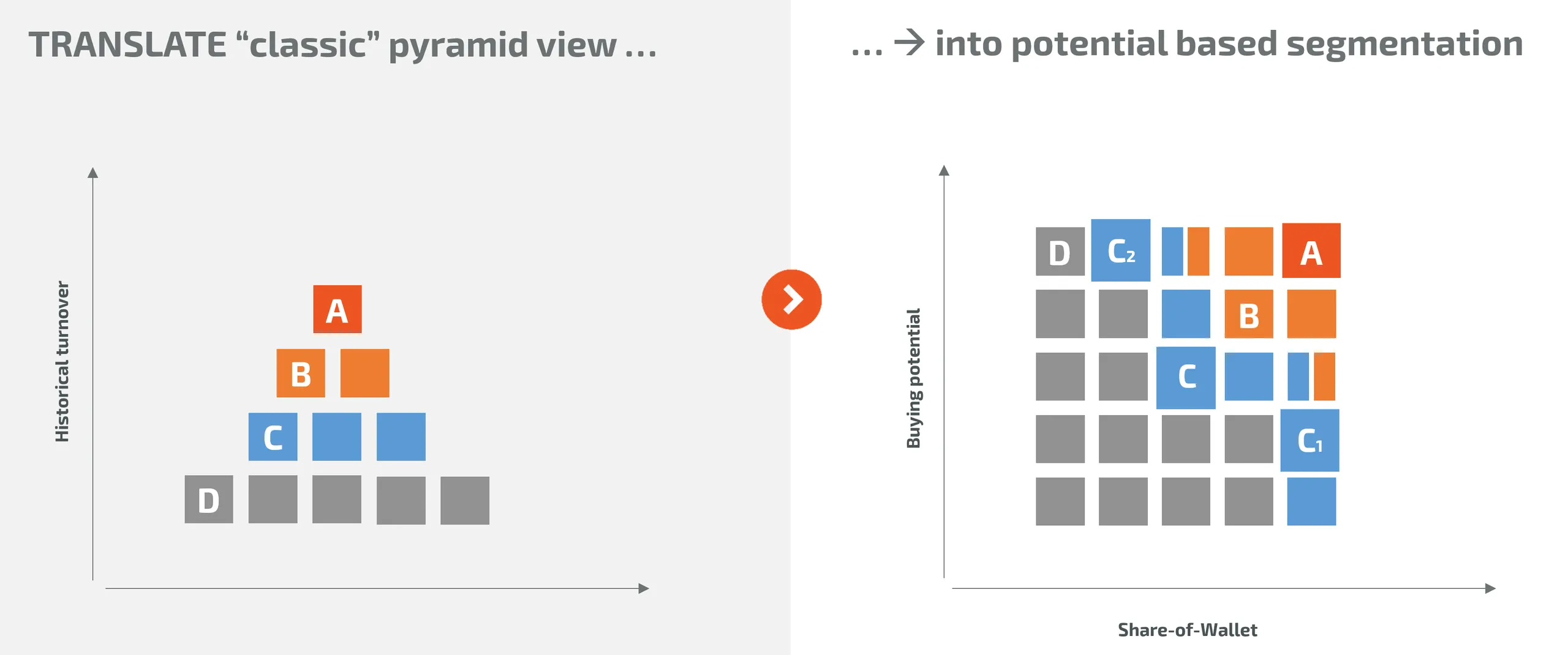
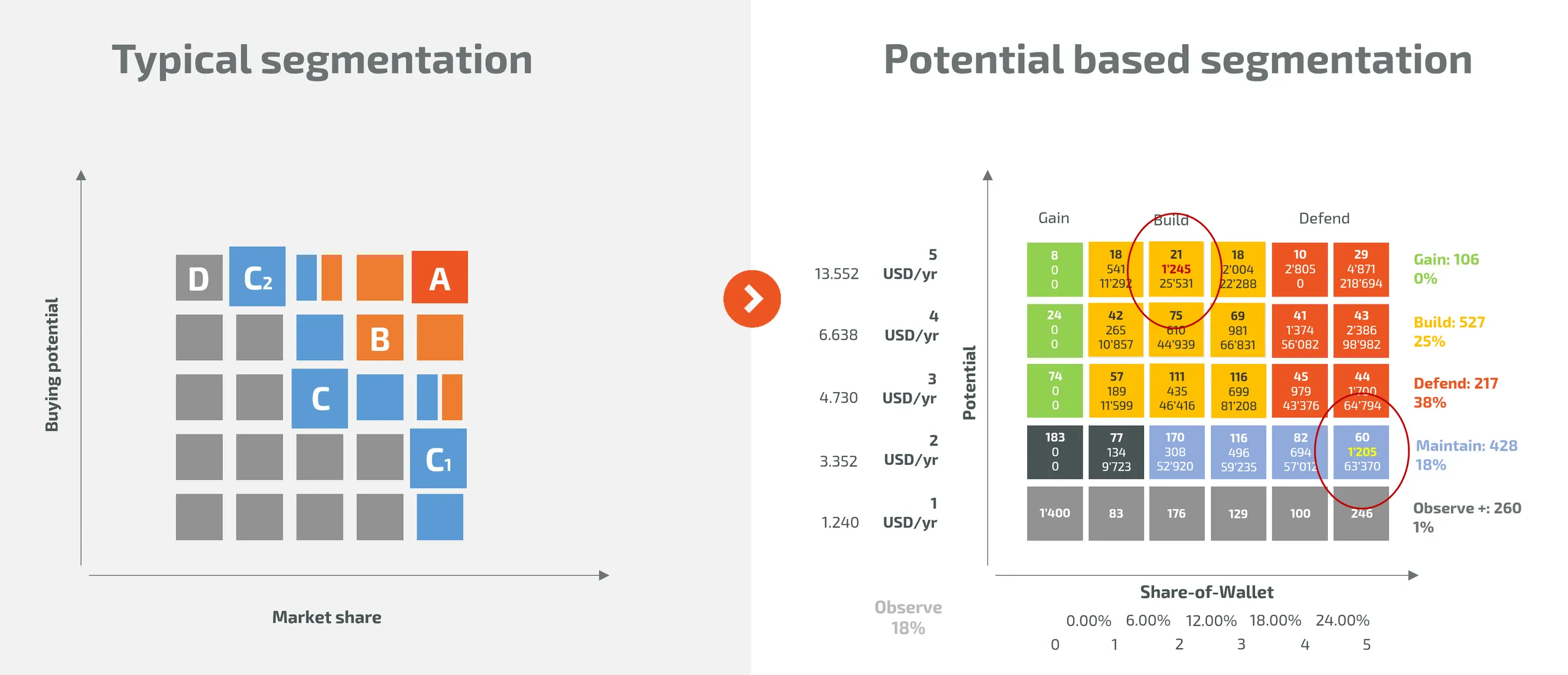
Instead of ranking customers by what they bought yesterday, boostpilot.ai ranks them by what they could buy. Two axes, four fields.
high potential, low share. The lever.
high potential, high share. The base no one may lose.
low potential, high share. Large and loyal, but maxed out.
low potential, low share. Service instead of field sales.
boostpilot.ai brings together four sources: ERP, CRM, Dun & Bradstreet (more than 500 million companies) and its own crawling data. More than 360 market variables give two values per account: how much this customer buys in your product groups in total, and what share you hold.
Traceable down to every single criterion and every market variable.
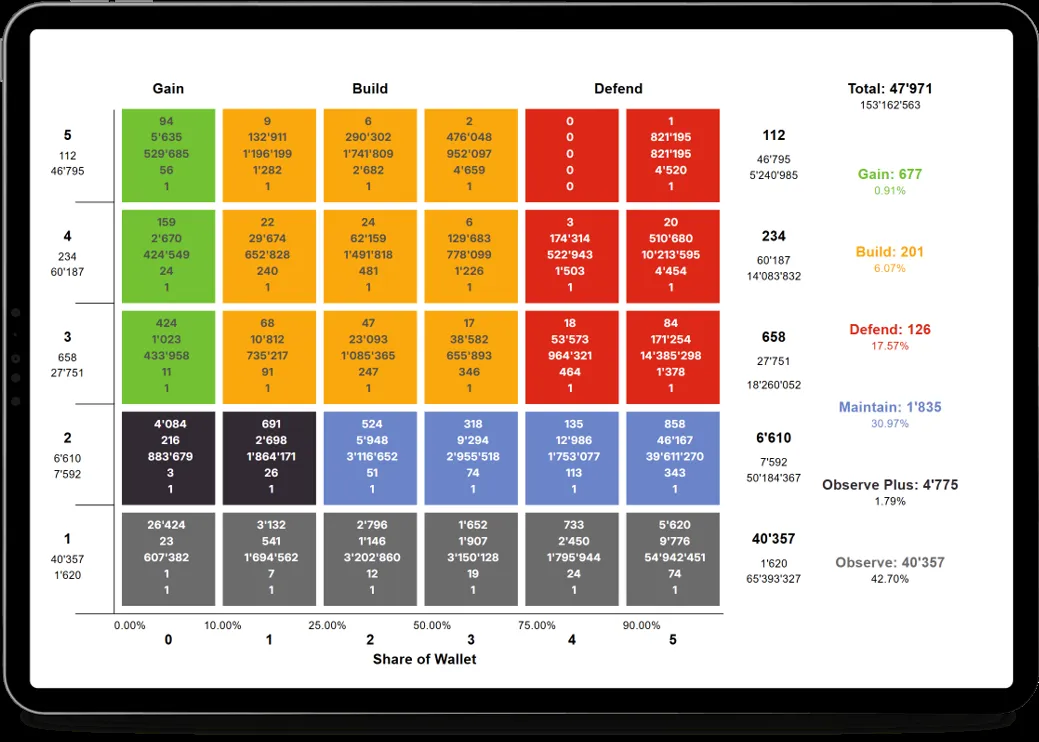
The automated Validation Engine is built into the whole process — a dedicated crew member checks every result against fixed validation criteria.
No team calls every inactive customer. boostpilot.ai shows which dormant customers carry potential and come first, and which are not worth the effort.
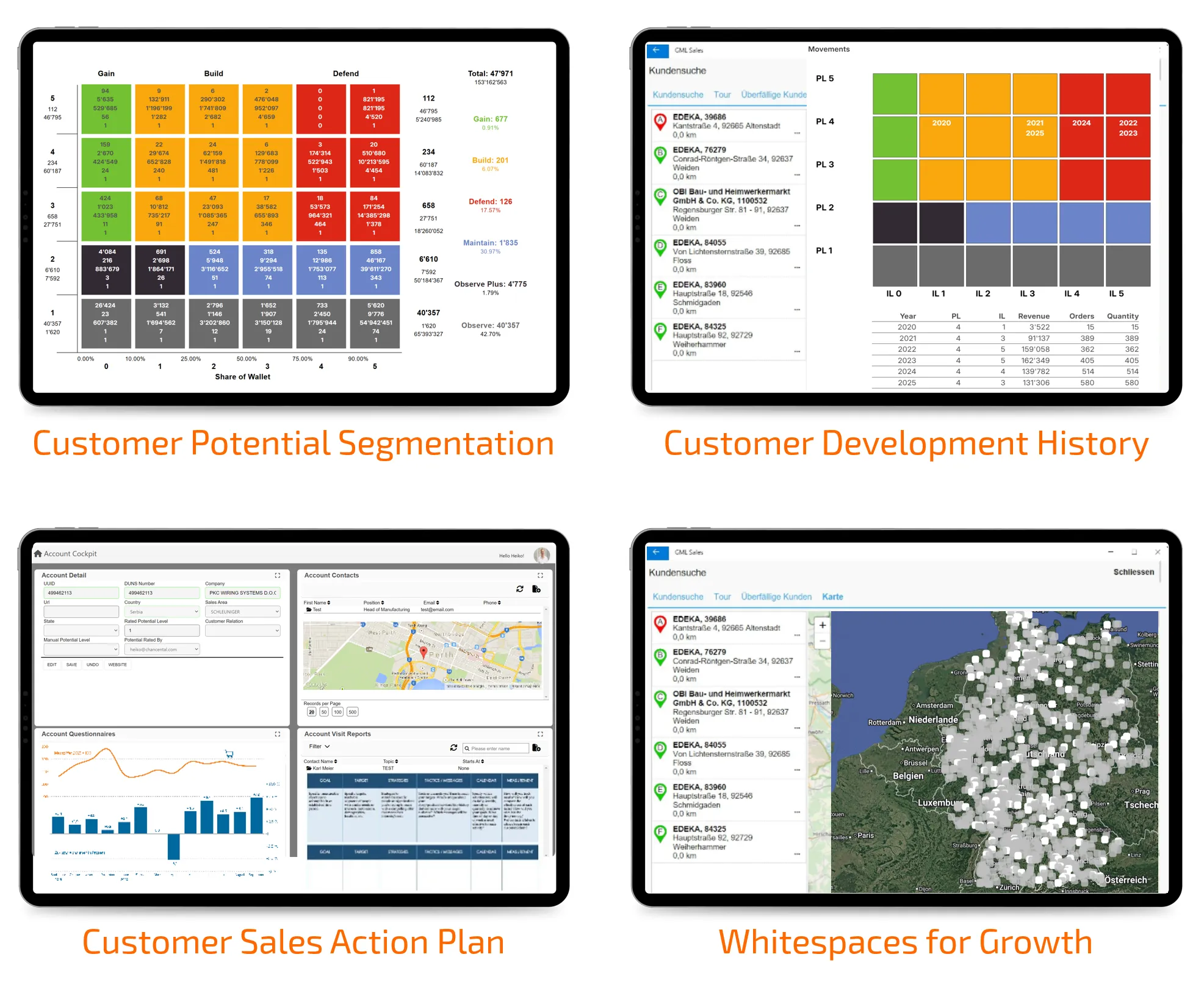
A customer list is enough. In 30 minutes we show you what your potential matrix looks like.
Book a demo